A tractor can roll out of a collision looking surprisingly intact while the real trouble sits underneath: a shifted axle, distorted frame rail, damaged air line, or cracked mounting bracket. For B.C. fleet managers, that makes ICBC heavy-duty vehicle repairs about much more than restoring appearances.
The challenge is identifying the full repair scope before that truck, trailer, or bus goes back to work. A methodical claim, inspection, repair, and verification process helps you control downtime while making sure collision-related damage isn't overlooked.
How Does the ICBC Commercial Repair Process Work?
For commercial vehicles involved in an ICBC claim, the process starts with reporting the collision and establishing the claim. ICBC's commercial estimating process applies to large commercial vehicles and heavy equipment, including heavy-equipment trucks, trailers, and buses at 8,800 kg and over.
From there, a typical commercial truck collision repair process looks like this:
- Report the collision and establish the ICBC claim.
- Have the truck, trailer, bus, or equipment assessed.
- Document visible damage and areas where hidden damage may exist.
- Develop the initial repair estimate.
- Inspect further during teardown and document additional damage.
- Complete approved structural, mechanical, body, and refinishing work.
- Inspect the completed repairs before returning the unit to service.
ICBC allows customers to have collision damage estimated at the repair shop they choose, while repair-network facilities can bill ICBC directly. For fleet managers, keeping vehicle specifications, contact information, and damage details organized can help prevent avoidable back-and-forth during the process.
Why Should Frame and Chassis Damage Be Checked Carefully?
The cab may take the obvious hit, but collision forces don't necessarily stop where the dent does. Heavy-duty frame repair may become necessary when an impact bends frame rails, moves mounting points, damages crossmembers, or changes chassis geometry.
A post-collision structural inspection may need to check for:
- Bent or distorted frame rails
- Cracked or damaged crossmembers
- Frame twisting or diamonding
- Shifted suspension mounting points
- Fifth-wheel mounting damage
- Cracks around brackets, mounts, and high-stress areas
ICBC's heavy-equipment repair requirements specifically recognize full truck and trailer frame repair as a specialized capability involving purpose-built equipment capable of applying forces in multiple directions.
Looks can fool you here. Fresh paint and straight body panels don't confirm that the chassis underneath is correctly aligned.
How Can a Collision Affect Steering, Suspension, and Alignment?
Your heavy truck suspension supports the truck and its cargo while absorbing road impacts and controlling wheel movement. Heavy trucks commonly use leaf springs or air suspension, with shock absorbers helping control impacts and rebound.
After a collision, technicians may need to inspect steering linkage, tie rods, kingpins, springs, air suspension components, torque rods, axles, and their mounting points. Commercial truck alignment also matters because axle position and chassis geometry directly affect how the truck travels down the road.
Watch the repaired unit closely. Pulling, dog-tracking, abnormal tire wear, or an off-centre steering wheel can justify another look at alignment, suspension, steering, or underlying structural geometry.
What Trailer Damage Can Be Hidden After a Collision?
Don't stop the inspection at the tractor's rear frame.
Collision forces on a combination vehicle can travel through the fifth wheel and kingpin into the trailer. Depending on the impact, commercial trailer repair inspections may need to cover the trailer frame rails, crossmembers, landing gear, kingpin area, suspension, axles, doors, side panels, roof structure, and air and electrical connections.
That's particularly important when the trailer shows little obvious exterior damage. Structural or suspension movement can be less dramatic to the eye but still matter once the combination returns to highway operation.
What Mechanical Damage Can Hide Behind Collision Damage?
Here's where an apparently straightforward body repair can grow.
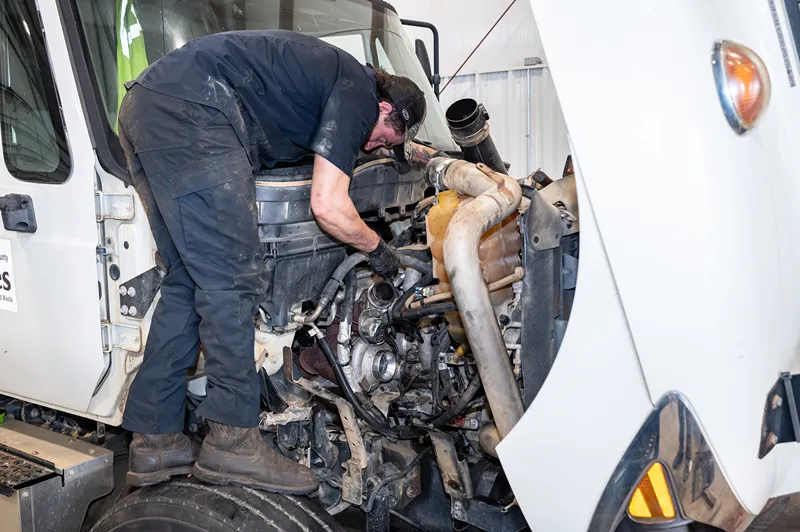
A frontal collision can affect the radiator, charge-air cooler, cooling fan, hoses, electrical connections, and other components behind the damaged panels. Because the cooling system transfers engine heat through coolant, the radiator, and associated components, collision damage in this area deserves more than a cosmetic inspection.
Depending on where and how the vehicle was struck, heavy-duty collision repair may also require checking:
- Cooling-system components
- Steering components
- Engine accessories
- Driveline components
- Axles and wheel ends
- Exhaust and aftertreatment equipment
- Air-brake components and lines
- Wiring harnesses
- Fuel tanks, mounts, and lines
The driveline transfers engine power through components such as the transmission, driveshafts, differentials, and axle shafts. Damage or displacement within that system can therefore affect operation well beyond the original impact point.
Why Can an ICBC Repair Estimate Change After Teardown?
An initial estimate is based on the damage that can reasonably be identified at that stage. Once technicians remove damaged panels and assemblies, previously concealed problems can become visible.
That might include bent brackets, wiring damage, cracked mounts, distorted suspension components, cooling-system damage, or additional frame deformation. Finding extra collision-related damage during teardown doesn't automatically mean the original inspection was inadequate; some damage simply can't be confirmed until surrounding components come off.
For fleet managers, good communication matters. Ask what was discovered, how it changes the repair scope, and whether the new work affects your anticipated completion date.
What Should You Look for in a Heavy-Duty Collision Repair Facility?
A Class 8 tractor isn't an oversized passenger car. Its dimensions, weight, air systems, frame, drivetrain, and commercial operating demands call for appropriate equipment and heavy-vehicle experience.
When evaluating a B.C. heavy-duty repair shop, consider capabilities such as heavy-duty lifting equipment, commercial frame equipment, welding, electrical diagnostics, mechanical repair, commercial refinishing, and sufficient space for tractors and trailers.
ICBC's Commercial Collision Repair Program includes requirements covering facilities, personnel, equipment, training, and business standing. Participation is voluntary for qualifying facilities, so don't assume every suitable repair facility must belong to the program.
How Can Fleet Managers Reduce Collision-Related Downtime?
A truck sitting in a repair bay isn't producing revenue. One disabled tractor, dump truck, straight truck, bus, or vocational unit can ripple through driver assignments, customer commitments, spare-unit availability, and trailer utilization.
Give the repair facility accurate vehicle specifications and operational information as early as possible. Maintain a clear point of contact, respond promptly when information is needed, and track additional damage discovered during teardown.
For larger B.C. operators, ICBC Fleetplan may also be relevant. Current ICBC information cited in the provided brief states that Fleetplan is available for businesses with five or more qualifying vehicles and required for customers with more than 20 eligible vehicles.
What Should Be Checked Before the Truck Returns to Service?
Before putting a repaired vehicle back into revenue service, look beyond clean panels and fresh paint.
Confirm that the steering is centred and the truck tracks properly. Check braking and air-system operation, warning indicators, lights, electrical systems, cooling-system integrity, panel alignment, and trailer connections as applicable.
Listen and feel for abnormal noise, vibration, or handling. After significant structural damage, make sure frame alignment, suspension geometry, and axle positioning have received appropriate verification rather than judging the repair solely by appearance.
Heavy-duty air brakes depend on interconnected components including the compressor, air dryer, tanks, air lines, service chambers, slack adjusters, S-cams, brake shoes, and drums. Collision damage around those components deserves careful attention before the vehicle resumes normal operation.
Keep Your B.C. Fleet Moving After a Collision
ICBC heavy-duty vehicle repairs require a broader view than ordinary bodywork. Structural geometry, steering, suspension, brakes, mechanical systems, and trailer components can all be affected even when the collision damage initially looks straightforward.
If one of your fleet vehicles has been damaged, contact our team at Freeway Truck Repair at (778) 701-8185 to discuss the vehicle's condition and heavy-duty repair needs. A thorough inspection and clearly defined repair scope can help you move from collision damage to a dependable return to service without overlooking the systems that keep your equipment working.
Frequently Asked Questions About ICBC Heavy-Duty Vehicle Repairs
What vehicles fall under ICBC's commercial collision repair process?
The provided ICBC guidance covers large commercial vehicles and heavy equipment at 8,800 kg and over, including heavy-equipment trucks, trailers, buses, trains, and other qualifying equipment.
Can hidden collision damage be added after the initial estimate?
Additional damage can become apparent during teardown. Components that initially conceal bent brackets, structural deformation, wiring damage, damaged mounts, or other collision-related problems may need to be removed before the full repair scope becomes visible.
Should a truck's alignment be checked after a collision?
Alignment and chassis geometry should be considered when an impact may have affected the frame, steering, suspension, axles, or their mounting points. Pulling, dog-tracking, abnormal tire wear, and an off-centre steering wheel are warning signs that warrant further investigation.
Can an ICBC collision repair include mechanical work?
Yes. Collision damage can extend into mechanical systems, and the provided ICBC material recognizes commercial facilities capable of performing mechanical and collision repairs, including drivetrain work.
What should a fleet manager verify before returning a repaired truck to service?
Check steering and tracking, braking and air systems, tires and alignment, warning indicators, electrical functions, cooling-system integrity, trailer connections, and unusual noises or vibrations. Significant structural repairs should also include appropriate verification of frame, suspension, and axle geometry.

.png)
.webp)
%20(2).webp)

