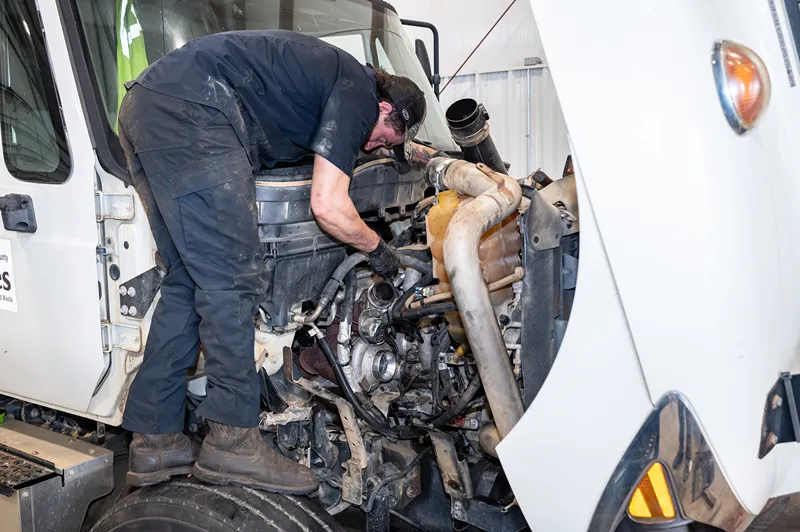
Summer heat can significantly increase the risk of heavy-duty truck breakdowns on BC roads. Engine overheating, tire blowouts, battery failures, brake issues, and transmission problems are among the most common causes. Understanding these risks and staying proactive with preventive maintenance can help improve reliability and reduce costly downtime.
Why Is Engine Overheating the Leading Cause of Summer Breakdowns?
Engine overheating is the most common reason heavy-duty trucks break down during the summer. High ambient temperatures combined with steep grades, heavy freight, and stop-and-go traffic force your cooling system to work harder than usual.
Your cooling system removes heat from the engine using coolant, a water pump, radiator, cooling fan, and fan clutch. If any of these components begin to fail, engine temperatures can rise rapidly, increasing the risk of warped cylinder heads, blown head gaskets, or catastrophic engine damage.
Common causes of overheating include:
- Low engine coolant
- Damaged radiator hoses
- Plugged radiators
- Worn water pumps
- Faulty thermostats
- Failing fan clutches
Checking coolant levels and inspecting the cooling system before long trips is one of the simplest ways to prevent a roadside breakdown.
Why Are Tire Blowouts More Common During the Summer?
Hot pavement and increased tire pressure make tire blowouts much more common during the summer months. As road temperatures climb, the air inside your tires expands while the rubber experiences greater stress.
Even a properly maintained tire can overheat under heavy loads, but the risk increases significantly when tires are underinflated, overloaded, or already worn.
Common contributors to tire blowouts include:
- Low tire pressure
- Uneven tread wear
- Overloaded trailers
- Improper wheel alignment
- Road debris
- Aging tires
A pre-trip inspection should always include checking tire pressure, inspecting tread depth, and looking for cuts, bulges, or exposed cords.
Can Summer Heat Damage Your Truck Battery?
Yes, high temperatures can shorten battery life just as quickly as freezing winter weather. Heat accelerates the chemical reactions inside your battery, causing fluid to evaporate and damaging internal components over time.
You may notice warning signs such as:
- Slow engine cranking
- Dim lights
- Corroded battery terminals
- Difficulty restarting after short stops
Your battery works alongside the alternator to power the truck's electrical system. If either component begins to fail, starting problems and electrical issues can quickly follow.
Routine battery testing can often identify a weak battery before it leaves you stranded.
Why Should You Never Ignore Coolant Leaks?
Even a small coolant leak can quickly lead to engine overheating in summer weather. Losing coolant reduces your engine's ability to transfer heat, allowing temperatures to climb much faster than normal.
Leaks often develop around:
- Radiator tanks
- Hose clamps
- Water pumps
- Heater hoses
- Expansion tanks
If you notice coolant beneath your truck or smell a sweet odour after parking, schedule an inspection immediately. Fixing a small leak is far less expensive than replacing an overheated engine.
How Do Mountain Highways Affect Your Brakes?
Long downhill grades generate tremendous heat that places extra stress on heavy-duty brake systems. British Columbia's mountain highways demand constant braking, especially when hauling heavy loads.
Heavy-duty trucks rely on air brake systems that use compressed air to activate brake shoes inside the brake drums. Excessive heat can reduce braking performance and accelerate component wear if the system isn't properly maintained.
To reduce brake temperatures:
- Use engine braking whenever possible.
- Downshift before descending steep grades.
- Avoid riding the brakes continuously.
- Schedule regular brake inspections.
Healthy brakes are essential for safe operation on BC's challenging terrain.
What Causes Transmission Overheating?
Heavy loads and high temperatures are the primary causes of transmission overheating during the summer. Transmission fluid absorbs heat while lubricating gears and bearings, but excessive temperatures reduce its ability to protect internal components.
Several issues can contribute to transmission overheating, including:
- Low transmission fluid
- Dirty fluid
- Blocked transmission coolers
- Heavy towing
- Stop-and-go traffic
Your transmission cooler helps dissipate heat before the fluid returns to the transmission. Keeping the fluid clean and at the proper level greatly extends transmission life.
Can Hot Weather Affect Your Fuel System?
Yes, summer heat can expose weaknesses throughout your truck's fuel system. Older fuel pumps, clogged fuel filters, or contaminated fuel can reduce fuel delivery when your engine demands maximum performance.
Watch for symptoms like:
- Hard starting
- Poor acceleration
- Engine hesitation
- Stalling
- Reduced fuel economy
Replacing fuel filters according to the manufacturer's maintenance schedule helps keep fuel flowing efficiently while reducing unnecessary strain on the fuel pump.
How Does Preventive Maintenance Reduce Summer Breakdowns?
Preventive maintenance is the most effective way to avoid summer roadside breakdowns. Catching small problems before they become major failures keeps your truck safer, more reliable, and less likely to experience costly downtime.
Before long trips, inspect your:
- Engine coolant
- Radiator
- Drive belts
- Hoses
- Engine oil
- Transmission fluid
- Battery
- Tires
- Air brake system
- Lights and electrical connections
Routine maintenance helps technicians identify worn components before they fail, improving reliability throughout the busiest hauling season. Preventive maintenance is one of the most effective strategies for reducing unexpected breakdowns and extending the lifespan of your truck's major systems.
When Should You Call Roadside Assistance?
You should call roadside assistance as soon as your truck develops a serious mechanical problem that could cause additional damage if you continue driving. Ignoring warning signs often turns a relatively minor repair into a much larger and more expensive one.
Common situations that require immediate assistance include:
- Engine overheating
- Tire blowouts
- Low oil pressure
- Brake failures
- Fuel delivery problems
Professional roadside technicians can diagnose the issue, perform emergency repairs when possible, or safely transport your truck to a repair facility if additional work is required.
Stay Ahead of Summer Breakdowns
Summer breakdowns are largely preventable with routine maintenance and early inspections. Keeping your cooling system, tires, brakes, battery, and transmission in good condition dramatically reduces the chances of unexpected downtime while travelling BC's highways.
FAQs
Why are truck breakdowns more common during the summer?
High temperatures place additional stress on your truck's cooling system, tires, battery, brakes, and transmission. Combined with heavy loads and long-distance hauling, summer conditions increase the risk of mechanical failures.
What is the most common cause of summer truck breakdowns?
Engine overheating is one of the leading causes of summer breakdowns. Cooling system issues such as low coolant, failing water pumps, clogged radiators, or faulty fan clutches can quickly lead to serious engine damage.
How can I reduce the risk of a summer roadside breakdown?
Routine preventive maintenance is the best defence. Regularly inspect coolant levels, tire pressure, brakes, battery condition, engine oil, transmission fluid, belts, and hoses before long trips.
What should I do if my truck starts overheating while driving?
Pull over as soon as it is safe to do so and shut the engine off. Continuing to drive an overheating truck can cause severe engine damage. Allow the engine to cool before inspecting the cooling system or contacting roadside assistance.

.png)
.webp)
.webp)